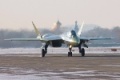
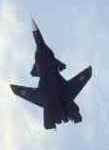
Su-57 novi ruski lovac

309

Su-57 novi ruski lovac

offline
  • Pridružio: 23 Dec 2006
  • Poruke: 12613

Covek je lepo objasnio ko je tata:

Citat:
Bill Sweetman wrote:
FMafia - The design that really reminds me of what we thought ATF was going to be, up to mid-1985, is the T-50. That was before Lockheed and Northrop offered all-aspect stealth, plus supercruise, supersonic maneuver and STOL, on the same money and schedule.


Inace to mu dodje kao Rockwell-ov ATF:
[Link mogu videti samo ulogovani korisnici]

Kod koga odraz jeste bio redukovan ali ne kao kod F-22. Rockwell je smatrao da je dolet, brzina i okretnost bitniji od sto manjeg odraza Wink


Registruj se da bi učestvovao u diskusiji. Registrovanim korisnicima se NE prikazuju reklame unutar poruka.
offline
  • Pridružio: 10 Jun 2008
  • Poruke: 4588

sivisoko ::

Kod klasicne postavke kada bi bocni radari bili paralelno postavljeni u odnosu na uzduznu osu aviona, zona skeniranja bi bila 300° sto je i najrealniji ishod. Manje od toga ne moze da bude.


Nisu paralelno postavljeni u odnosu na uzduznu osu aviona nego su paralelna samoj površini. Zašto komplikovati Wink :


sivisoko ::
U tom slucaju bi doslo do ukrstanja snopova bocnih radara sa snopovima glavnog radara.


Nebi, jer koristi istu foru kao F-22. Glavni radar gleda napred i malo prema gore, dok bočni gleda sa strane dole i malo napred.


offline
  • Pridružio: 12 Jan 2011
  • Poruke: 1532

Pa ima logike, jer ako se danas već zna(ne pretpostavlja) da i naj-Stealth može da se vidi sa radarima starije generacije u odredjenim situacijama i pod osredjenim uglovima, jedina nepozata ili X je koliko će poslednje generacije Airborn radara povećati procenat tih situacija i uglova pod kojima se Stealth otkriva , a jednom kada se razotkrije(naravno dok je u režimu dolaska ka meti)onda se stealth kao "capabilllity" spušta sa prvog na eN-to mesto a brzina i okretnost se penju na prvo. A ja i dalje stojim iza tvrdnje da je naše obaranje F-117-ce odigralo važnu ulogu kada su u pitanju postavljani prioriteti , kako treba da izgleda i kakvu kombinaciju osobina lovca 5.gen i u kakvom odnosu, treba da ima T-50. Pored onoga što je možda bilo presudno, da Rusi sa T-50 nisu imali i nemaju pravo na grešku sa PAKFA, kada je u pitanju zadati tok i kontinuitet razvoja, što zbog vremena , a što zbog novca, a vreme je novac Wink

offline
  • Pridružio: 23 Okt 2010
  • Poruke: 1260

@Atomic

Citat:Nisu paralelno postavljeni u odnosu na uzduznu osu aviona nego su paralelna samoj površini. Zašto komplikovati Wink

Ja nisam ni rekao da su paralelno postavljeni vec sam razmatrao sva moguca resenja.
Sledeca stvar je da ne znamo da li su paralelni sa povrsinom oplate aviona, odnosno sa sigurnoscu mozemo da kazemo da nisu jer jos nisam video ni jednu resetku koja bi bila izuvijana po svim osama kao sto je to slucaj sa oplatom koja mora biti takva (elipsoidna) zbog aerodinamickog oblika, a otvor za radar mora postojati.
Recimo, osnovni radar je zakrenut za 15° sto u principu nismo znali do sada vec smo mogli samo da pretpostavljamo. Isto tako mozemo samo da pretpostavljamo koji je nagib bocnih radara.
To nisu komplikacije jer je poenta bocnih radara da se prosiri polje zahvata osnovnog radara koji je fiksnog tipa zbog smanjenja RCS aviona.
Ako bocni radari prate samu povrsinu oplate koja se suzava ka vrhu, ugao zahvata radara ce biti manji sto u principu nije cilj.
Ne vidim neki realan problem da radari budu paralelni sa uzduznom osom, jer se u tom slucaju radi o zakosenju od samo nekoliko stepeni u odnosu na oplatu.

Evo kako bi to moglo da izgleda kada su bocni radari paralelni sa uzduznom osom aviona


Problem bio mogao da nastane kod one postavke koja ce omoguciti polje zahvata od skoro 360°

Citat:
Nebi, jer koristi istu foru kao F-22. Glavni radar gleda napred i malo prema gore, dok bočni gleda sa strane dole i malo napred.


Apsolutno da bi!


Pogled iz pticije perspektive to jasno pokazuje.
Glavni radar ima polje zahvata od 120° po elevaciji i azimutu, a blago zakosenje na gore nije dovoljno da se snopovi ne bi ukrstili.

offline
  • Pridružio: 26 Mar 2009
  • Poruke: 4966
  • Gde živiš: Šid

052

offline
  • Pridružio: 30 Apr 2010
  • Poruke: 550
  • Gde živiš: Beograd

Veoma interesantan članak: http://www.forceindia.net/Special%20Report8.aspx

Ono što je zanimljivo je da je osnov partnerstva u projektu ulaganje najboljih znanja obeju strana radi stvaranja što efikasnijih sistema koje će obe strane koristiti u svojim letelicama. Rusija sa svoje strane ulaže u aerodinamiku, motore i naoružanje a Indija u elektronske sisteme, softverska rešenja, HUD, kompozitne materijale. Krajnji cilj je stvaranje ultimativne letelice koja će biti univerzalna i primenjiva u svim situacijama i misijama koje zahteva oružani sukob 21 veka.

Članak u celosti
Citat:Back to the Future

Indian input to exceed one third of the total D&D of the IAF’s FGFA

Atul Chandra

Hindustan Aeronautics Limited (HAL) will have a substantial role in the development of the 5th generation Perspective Multi-role Fighter (PMF) being developed for the Indian Air Force (IAF) over the next decade. N.C. Agarwal who retired as director, Design and Development, HAL, last month told FORCE that, “Indian designers would contribute over one-third of the total share of R&D (including all prototypes) for the project along with Russia, by the time aircraft is certified.” The India team will have access to all the design data and information and a number of agreements with the requisite confidentiality clauses have been signed in this regard”.

HAL will primarily be involved with redesign of the structure for the twin-seat variant and oversee the integration of a number of systems that have been specified by the IAF. In the preliminary design phase expected to be completed by in the last quarter of 2012, HAL will ascertain the impact of changes that need to be made to the aircraft for the twin seat variant desired by the IAF. The PMF currently sports a radar cross section of approximately 0.5 and it needs to be seen if the twin-seat variant will have reduced stealth characteristics due to the increased cross section as also changes to its aerodynamic and ‘g’ performance. According to Agarwal, “The changes would mean keeping a close eye on the Radar Cross Section (RCS), the engines will remain the same and should not affect stealth as the IR signature primarily comes from reheat”. The ability to super-cruise will also contribute to stealth as the IR signature will be substantially reduced without use of reheat.

It appears that the Indian side will make contributions with regards to the software, electronics and advanced mechanical systems on the PMF (FGFA/T-50). The T-50 (FGFA). Many of FGFA/PMF technologies were tested first on Su-35 fighters.

Derivatives of a number of mechanical systems developed within the country by various organisations for a number of home-grown programmes could find their way to the PMF. In fact, it has been conveyed to the Indian team, that if Indian developed systems are superior to those developed by Russia, then they will be incorporated on the Russian variants as well. It is very likely that Indian developed systems could be part of the Russian T-50 (FGFA).

NPO Saturn will begin development of a brand new engine expected to generate around 18 tonne of thrust, though it is five to six years away from being installed on the FGFA/PMF. According to Agarwal, “The offer to partner in the development of a brand new and higher thrust engine is open, and the country should utilise this opportunity to enter this field even if the costs involved are extra”. ITAR-TASS has quoted Ilya Fyodorov, managing director of NPO Saturn as saying that the new engine will be on the FGFA by 2017. Apart from a few aircraft, the PMF entering IAF service is likely to be fitted with the new engine around 2020.

The glass cockpit will be developed by Russia and India though initially the eight inch x 10 inch and 12 inch x 10 inch Multi Functional Display’s (MFD) will come from Russia. These displays are also being developed in India and could be incorporated on Russian aircraft if they demonstrate better performance. The PMF cockpit is likely to be very similar to that already seen on the Su-35 with a number of Indian systems and the addition of a large wide angle HUD as seen on the FGFA prototypes flying currently. In fact the 10 inch x 12 inch display is already being offered for the Su-30 MKI upgrade to the IAF and many upgrade items on the Su-30 MKI will make its way to the PMF. A high quality Helmet Mounted Display System (HMDS) will also be incorporated.

The PMF will feature a composite wing and HAL will contribute with regards to composites, though Russian assistance will be present as the composites developed have to cater for high speed and high temperature applications. Smaller items such as tyres, fire suppression systems, on-board oxygen systems will be developed by India for the PMF. Carbon brakes are also on offer, as India possesses this technology and it is also being developed for the Su-30 MKI. Software design, development and validation is another area that India will contribute for the programme.
This is the first time that India will be partnering in a state of the art design programme involving a number of strategic technologies such as this and nothing like this has been done in the past. Certification requirements will be handled jointly with Indian aircraft being certified by Centre for Military Airworthiness & Certification (CEMILAC) and the Russian aircraft by their certification agency. No doubt the enormous amount of work done by CEMILAC and HAL during the certification process of the Advanced Light Helicopter ‘Dhruv’ and Light Combat Aircraft ‘Tejas’ will be invaluable. With a production run in excess of 200 being envisaged, spares for the PMF will be manufactured by HAL in India with many of the Line Replaceable Units (LRU) being proposed for manufacture through Transfer of Technology (ToT), though exact details have not been made public. HAL will set up maintenance/repair and overhaul facilities in India and access to design and development data for the PMF would also enable trouble shooting to take place much faster.

The IAF PMF will be a 21st century fighting platform capable of providing a high level of situational awareness with sensor fusion and network centric warfare capability. It will feature an advanced AESA radar capable of launching long range missiles and new generation electro optical sensors for search and track for the highly agile close combat missiles. It will be the first combat aircraft to feature stealth technology outside the USA since the F-117 became operational close to three decades ago. While 4th generation fighters such as Su-27/30, Eurofighter have exhibited excellent manoeuvrability, this was mainly in the subsonic regime whereas one of the main advantages of the 5th generation FGFA/PMF will be its ability to perform manoeuvres at supersonic speeds combined super cruise (travel beyond speed of sound without afterburners).

Indian and Russian requirements for the fighter currently stand at approximately 400 units, with Russia having committed to 60 units so far. According to report by the Centre for Analysis of the Global Arms Trade, Russia could end up with a total of 400-450 units from 2020 to 2040. As per the report, potential buyers for the FGFA could be Algeria, Argentina, Brazil, Venezuela, Vietnam and Egypt. It further added Indonesia, Iran, Kazakhstan, China, Libya, Malaysia and Syria. It is surprising to see China on the list considering the blatant copies of Russian SU-27 series fighters that have taken place there.

For an aircraft introducing a host of new technologies, the Sukhoi T-50 has had a surprisingly smooth journey so far. This has been aided by the approach of using the Su-35 as a platform to introduce a number of new technologies. The Su-35 must be acknowledged as the most capable version of the Su-27 series of fighters along with the upgraded IAF Su-30 MKI which will feature many of the same technologies.

Currently, two prototypes of the T-50 are flying. The first prototype flew on 29 January 2010 and the second prototype flew on March 3 this year. Four prototypes are now in use out of which two are flying, from the remaining two, one is being used for static tests and the other, as a full scale integrated test bed respectively. The third flying prototype is scheduled to be fitted with the prototype AESA radar being developed by Tikhomirov — NIIP. The aircraft is scheduled for entry into service with the Russian Air Force by 2015, though it is likely that this will take a few years more. The aircraft is now flying with the AL-41F, generating 15 tonnes of thrust and is a thoroughly redesigned variant of the AL-31F. It makes use of a new fan and high and low pressure turbines, with a new digital control system. The between-repair period has increased from 500 to 1,000 hours.

Tikhomirov-NIIP is designing the X-Band AESA radar for the FGFA/PMF. The Indian Air Force (IAF) has asked for 360 degree coverage and at present the FGFA features X-band and L band antennas, though changes in the Indian PMF are likely in view of IAF requirements. The radar has completed a number of tests and the designer is said to have fixed many of the issues related to cooling of the power hungry AESA radar. The fourth flying FGFA prototype will be fitted with production standard AESA radar. The radar complex along with associated electronics and data links will make the FGFA/PMF truly network centric with capability to communicate to other aircraft, AWACS and ground-based sensors through secure data links. All this makes for expensive equipment as the current Gallium Arsenide (GaAs) technology to be used for the more than 1000 transmit and receive modules on the radar is costly and complicated to manufacture. The company is also separately working on a gradual upgrade of the BARS phased array radar on the SU-30 MKI and a phased upgrade will see the addition of more operating modes with addition of improved hardware and processing power initially followed by replacement of the original phased array radar with an AESA and an agreement has been concluded for the same for the IAF Su-30MKI upgrade.

The FGFA/PMF will provide the pilot with a very high level of situational awareness and the addition of the extra seat will only enhance the quality of decision making by the crew. In fact, the Indian PMF will differ from the global standard as being the only 5th generation twin seat fighter in operation (excluding trainer variants for others). Even among the 4th generation fighters the majority were single seat variants. The integration and testing of the sensors is an area where India can profit from immensely as there is significant expertise in the integration of avionics and weapons in programmes undertaken for Su-30 MKI, Jaguar DARIN 3 upgrade, MiG-27 and also the LCA. DRDO is expected to tie up with a foreign manufacturer to design a state of the art EW suite for the PMF. The ability to have complete access to software and make changes as and when required will save huge amounts of time and as has been seen often, manufacturers are not too keen to make changes once the aircraft has been sold and being a partner will help here. There will be plenty of commonality with the Su-30 MKI upgrade and this will ensure that many of the systems will be common across the 270 plus upgraded Su-30 MKI fighters and the 200 plus PMF aircraft.

The FGFA/PMF will feature the latest in Russian weapons under development and will include an array of short, medium and long range missiles. The Vympel design bureau has taken the lead in this area and one of the missiles that will be fitted on FGFA/PMF will be the RVV-MD Close Combat Missile (CCM). The RVV-MD will feature an upgraded all-aspect two-mode heat-seeking front end with a 30 per cent increase in range over the R-73E dogfight missile it is intended to replace. While the R-73 was acknowledged as one of the deadliest CCM’s of its generation the successor RVV-MD will have a more powerful rocket motor with combined aero-gas dynamic controls that liberate higher angles of attack than the ±60 degrees of the R-73E with ability to engage targets manoeuvring at up to 12G. The primary BVR missile for the FGFA/PMF will be the RVV-SD with a range of 110km, and compared with the older RVV-AE missile, the RVV-SD features all-aspect kill capability, enhanced performance against electronic countermeasures (ECM) in the look-down mode and multiple target fire and forget performance.

The FGFA/PMF will also feature a new series of Russian air-to-ground weapons and one of these will be the advanced Kh-38ME multi-purpose missile with modular design, inertial guidance system and terminal precision-guidance variants that can be fitted with laser, thermal-imaging, radar or satellite navigation homing heads. The Kh-38ME can contain a blast/fragmentation warhead, penetrator warhead, and a cluster-type warhead as an option. The high speed missile is fitted with a dual-pulse solid-fuel rocket motor that pushes the missile to Mach 2. Compared to the older Kh-25ML, the Kh-38ME according the published data, weighs almost twice as much at 520 kg, and carries a 250kg (86kg for Kh-25ML) warhead to a maximum range of up to 40km compared to 10km for the Kh-25ML. The Kh-31PD anti-radiation missile and Kh-31AD anti-ship missiles with a combined power plant of a ramjet sustainer and a solid-fuel booster motor are also on offer and offer far superior performance to the previous generation Kh-31 series. The new-generation Kh-31PD/AD missiles are heavier and carry larger warhead over longer distances compared to its earlier variants.

The PMF programme is the logical evolution to the Su-3O MKI fighter which gave the IAF technologies that were ahead of even the world powers. The PMF project now provides access to technology on a scale never seen before and it is very likely that the issue will not be how much technology we will get but how much we can actually absorb. The PMF should generate enough learning’s for us to begin development of our own 6th generation fighter by 2030 either alone or as equal partner right from the project definition phase onwards with a global partner.

offline
  • Pridružio: 26 Mar 2009
  • Poruke: 4966
  • Gde živiš: Šid

052

offline
  • Pridružio: 22 Jun 2011
  • Poruke: 275
  • Gde živiš: Indjija

Jel se zna koliko primeraka T-50 je do sad napravljeno?

offline
  • Pridružio: 08 Apr 2011
  • Poruke: 783
  • Gde živiš: Loznica

na vikipediji pise 2 ekspediciona i 2 borbena

offline
  • Pridružio: 17 Sep 2010
  • Poruke: 24149

anonimus1993 ::Jel se zna koliko primeraka T-50 je do sad napravljeno?

Cvaj komaden Razz bort-ovi 051 i 052 Wink

Ko je trenutno na forumu
 

Ukupno su 1222 korisnika na forumu :: 12 registrovanih, 2 sakrivenih i 1208 gosta   ::   [ Administrator ] [ Supermoderator ] [ Moderator ] :: Detaljnije

Najviše korisnika na forumu ikad bilo je 6047 - dana 19 Dec 2025 13:40

Korisnici koji su trenutno na forumu:
Korisnici trenutno na forumu: Django777, draganl, drale12, HrcAk47, Makeitdrip, pacika, pirke96, Saša31LPB, Slingshot, Tastatura ratnik, Zastava, zlatkoa987